There are two TeTra events this week, a research seminar paper from Oana Maria Cojocaru (Tampere) and the first TeTra Lecture of 2025 by Jost Gippert (Hamburg), in successive days. Here are the details (do note the different times!):
Wednesday 24 January, 4 pm CET | TeTra Lecture
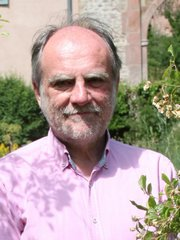
Jost Gippert (Universität Hamburg)
The Written Heritage of Caucasian Albanian
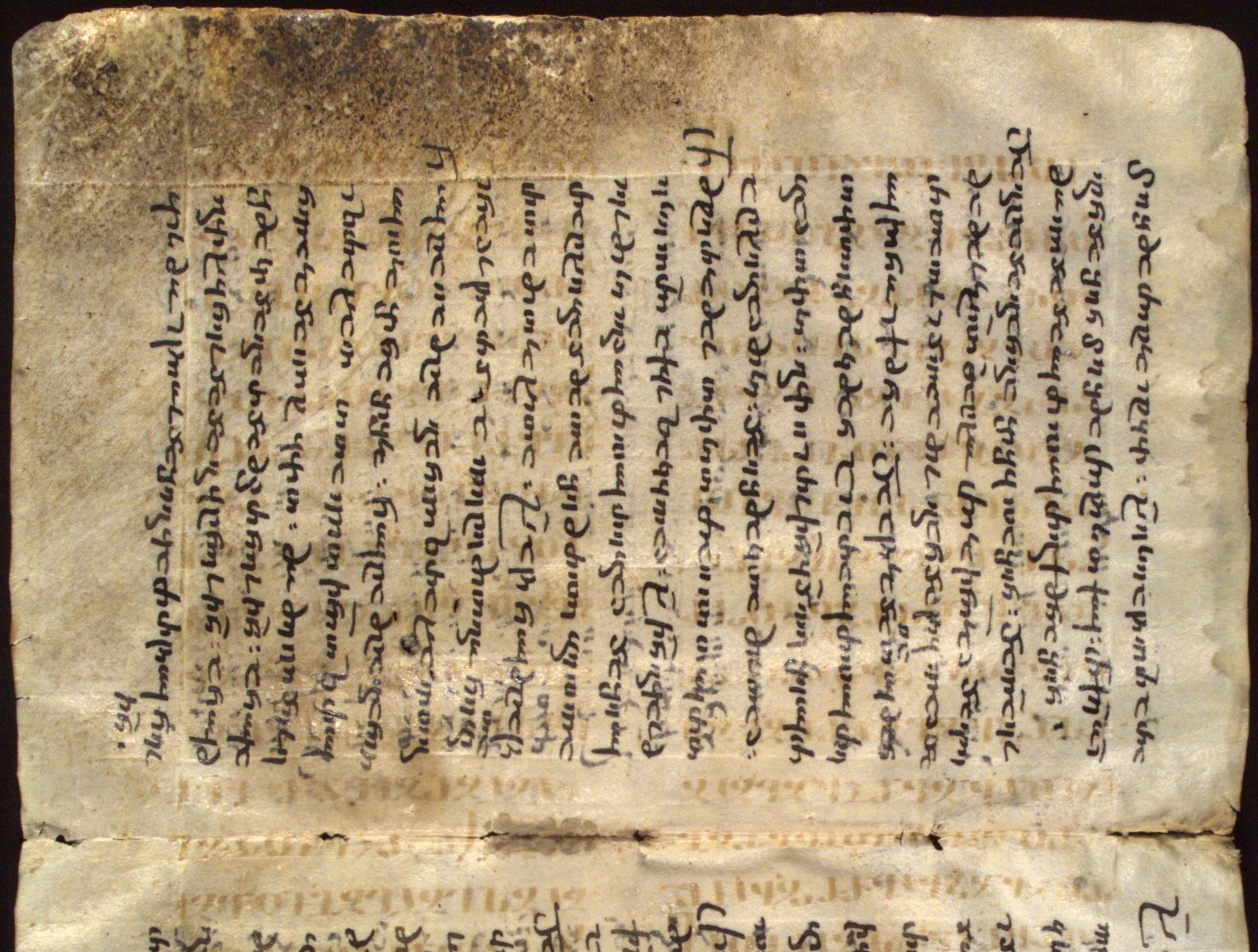
- According to his pupil Koryun, the Armenian monk Mesrop Mashtots (early 5th century) created not only the Armenian alphabet but also one for the neighbouring people of the so-called Caucasian “Albanians”. It took until 1937 for the first evidence of this alphabet to be found, in an Armenian manuscript that contains a list of 52 “Albanian” letters and their names. A few years later, excavations in northwestern Azerbaijan revealed some inscriptions that appeared to be written in the same alphabet. With the discovery of two Georgian palimpsest manuscripts among the so-called “New Finds” in St Catherine’s Monastery on Sinai, whose deleted script could also be determined to be “Albanian”, it was finally possible to decipher the language of the Caucasian “Albanians” and to make the surviving text materials, all of them biblical, accessible to scientific research in an edition that was published in 2008.
- In my paper, I will briefly trace the history of the decipherment of Caucasian-Albanian before discussing new insights that have been made since the publication of the edition through the use of new imaging technologies for the decipherment of palimpsests. We will deal with the analysis of the Albanian alphabet, the expansion of the Albanian lexicon with new word material – inherited and borrowed – as well as new insights into the grammar of Albanian. Particular attention will be paid to the question of the relationship between the Albanian Bible texts and those of neighbouring languages.
Jost Gippert is Senior Professor at the Universität Hamburg and Principal Investigator of the ERC Advanced Grant project ‘The Development of Literacy in the Caucasian Territories’ (DeLiCaTe) (2022-2027), having previously held positions in Berlin, Vienna, Salzburg, Bamberg, Tbilisi, and Frankfurt am Main.
In the image the palimpsest manuscript Sin. georg. NF 13.
Thursday 25 January 2024, 10 am CET
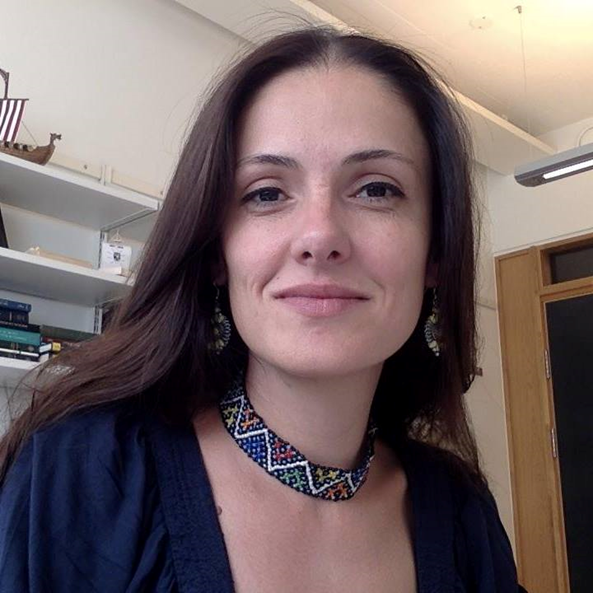
Oana Maria Cojocaru (Tampere University)
Dis/ability and Byzantine Hagiography
- Religion held a central role in the daily lives of the Byzantines, not only shaping their identity but also guiding their actions and interactions and shaping their worldview. A fundamental aspect of Byzantine Christianity was the veneration of saints, which offer individuals a platform where they could make sense of their experiences of life, ask for help, express their hopes, fears, and anxieties, and voice their emotions in a cultural sanctioned way. The cult of the saints which prompted a prolific literary tradition detailing their lives, deeds and miracles, serves as a lens to explore the various ideas and conceptualizations of disability in the Byzantine world, and to a limited degree the lived experiences of the disabled. In this presentation I will discuss first the differences in the narrative teatments of disability by various hagiographers, and their attempts at explaining its source or reason depending on their religious and moral agendas. In the second part, I will discuss the religious practices that have at the center the disabled people from all walks of life, with a particular focus on the actions and interactions in various forms of these people with the saints and their relics.
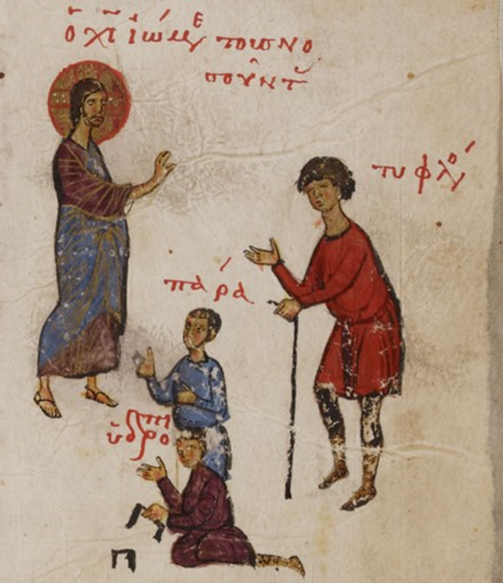
Image: Christ healing the sick, manuscript illumination from The Theodore Psalter (1066),
British Library Additional MS 19352, 136r.
If you are interested in attending and are not yet on the TeTra mailing list, please get in touch with one of the TeTra convenors to receive the Zoom link, at marion.pragt@kuleuven.be, giorgia.nicosia@ugent.be, andy.hilkens@ames.ox.ac.uk, or dan.batovici@kuleuven.be.
The programme is available here. Our YouTube channel with recordings of previous papers and lectures: https://www.youtube.com/@TeTraSeminar . You can also find us on Twitter/X and Facebook.
 reception matters & manuscripts
Leave a comment